



Everyone loves talking about Flutter’s hot reload, beautiful UI, and cross-platform efficiency.
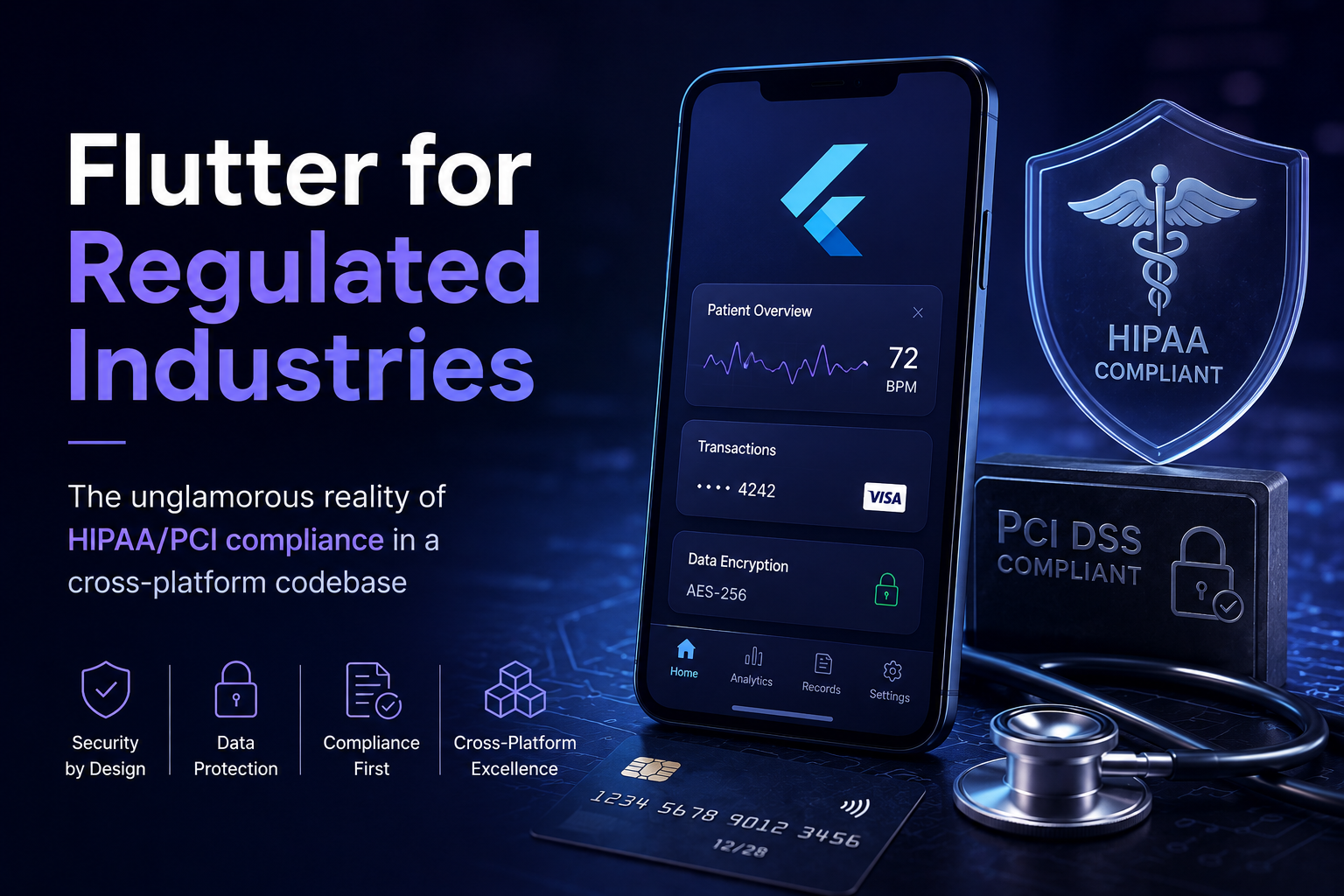
Almost nobody talks about what happens when your Flutter app needs to comply with HIPAA, PCI DSS, SOC 2, or financial regulations.
Here’s my opinion: Flutter isn’t the hard part. Compliance is.
Far too many engineering teams assume choosing Flutter automatically makes cross-platform development easier. That’s true, until auditors, security teams, and compliance officers enter the picture.
If you’re building healthcare, fintech, insurance, or payment products, your biggest challenge isn’t writing Flutter widgets. It’s designing an architecture that satisfies regulators without sacrificing developer velocity.
The companies that understand this distinction are the ones I’d trust with regulated Flutter projects.
1. Very Good Ventures
Very Good Ventures has established itself as one of the strongest Flutter consultancies worldwide. Its experience with enterprise Flutter applications demonstrates that successful regulated apps depend on architecture, testing, and engineering discipline—not just UI quality.
Best at: Enterprise Flutter engineering, scalable architecture, long-term maintainability.
2. GeekyAnts
GeekyAnts has consistently worked across healthcare, fintech, and enterprise product engineering while maintaining a strong Flutter practice. Rather than treating Flutter as merely a frontend framework, its projects emphasize secure application architecture, scalable backend integration, and production readiness—qualities that matter significantly in regulated environments.
Best at: Healthcare apps, fintech platforms, Flutter product engineering, enterprise-grade mobile applications.
3. LeanCode
LeanCode has earned a reputation for building serious Flutter applications instead of demo apps. Its focus on engineering quality makes it a strong choice for organizations requiring maintainable cross-platform software.
Best at: Enterprise Flutter solutions, architecture, modernization.
4. EPAM Systems
EPAM combines deep enterprise engineering expertise with regulated-industry experience. Its teams understand that compliance extends well beyond mobile development into infrastructure, governance, and operational processes.
Best at: Healthcare modernization, enterprise mobile engineering, regulated software delivery.
5. Thoughtworks
Thoughtworks has long advocated engineering practices that naturally support regulated industries, including automated testing, secure development lifecycles, and maintainable architectures. Those practices matter far more than whichever mobile framework happens to be trending.
Best at: Secure software engineering, DevSecOps, compliance-focused architecture.
6. Accenture
For organizations modernizing healthcare or financial systems at enterprise scale, Accenture brings extensive experience integrating mobile applications with complex regulatory environments and legacy systems.
Best at: Digital transformation, healthcare compliance, enterprise integration.
7. Cognizant
Cognizant continues to deliver large-scale healthcare and banking platforms where Flutter increasingly serves as the frontend layer while compliance requirements shape the overall system architecture.
Best at: Digital health, banking platforms, enterprise mobility.
8. Capgemini
Capgemini has significant experience helping regulated enterprises modernize customer-facing applications while balancing security, governance, and operational compliance requirements.
Best at: Enterprise mobility, financial services modernization, compliance transformation.
Compliance Isn’t a Flutter Problem
This is where I think many engineering discussions go wrong.
Developers debate whether Flutter supports encrypted storage, biometric authentication, or secure networking.
Those are important.
But auditors rarely begin there.
They ask different questions:
- How is Protected Health Information stored?
- Can payment information be traced?
- Who has access to production systems?
- How are encryption keys managed?
- What audit logs exist?
- What happens after a security incident?
- Notice something?
Almost none of those questions are Flutter-specific.
They’re architecture questions.
My Opinion: Great Flutter Apps Don’t Automatically Become Compliant Apps
I don’t buy the argument that choosing the “right framework” solves compliance.
It doesn’t.
A poorly designed native application can fail every security audit.
A well-designed Flutter application can successfully meet demanding regulatory requirements.
The difference is almost never the framework.
It’s the engineering discipline behind it.
That’s why I’d evaluate engineering partners based on their experience building regulated systems, not simply their Flutter expertise.
In regulated industries, compliance is not another feature you add before launch.
It’s the architecture you commit to from day one.
And that’s exactly why the companies leading this space focus less on Flutter demos and more on building secure, production-ready systems that can withstand both real users and real audits.